In a sort of follow on to last years post we will take a deeper dive into the uniforms and equipment used by the soldiers of the 27th Infantry Division in Operation Forager. Some of the main or key elements I wont point out repeatedly so I’ll cover them here in the beginning.
The general uniforms of the soldiers of the 27th on Saipan were a mix of HBT fatigue patterns. The most common is 2nd/3rd patterns with the large pockets but a number of 1st pattern jackets still turn up in photos. I’m unable to determine between the 2nd and 3rd patterns from the photos being black and white but I am inclined to say it was predominantly the lighter 2nd pattern as they look the same shade as the 1st patterns that pop up in the same photos. But that could always just be fading, lighting or the contrast in the photo.

The most distinctive though is the painted helmet camouflage. They apparently used vesicant paint to add a blotchy pattern to all of their helmets. The somewhat stark contrast in the photos makes me think it was the more mustard color that is seen on vehicles but in the one color photo I came up with it was the lighter green. Maybe it’s just that both were used? Sadly the Army was never as photo happy as the Marines so finding good photos and especially those in color is a challenge in the Pacific.

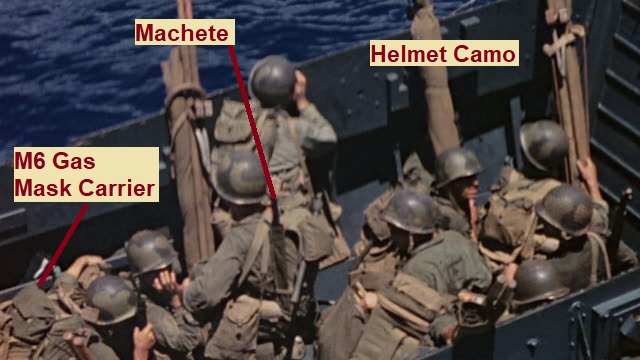
The other standout item of the 27th Division on Saipan though is the special 5 pocket grenade pouch a large portion of the men had. It looks to have been pretty popular and useful and it surprises me that it turns up no where else to my knowledge.


M1936 suspenders were commonly seen even though the standard pack was the M1928. Obviously officers would have them but they turn up in a lot of photos of enlisted.


Something that was apparently in vogue on Saipan was wearing the M1910 shovel/entrenching tool hooked to the the suspenders. It was common among both soldiers and marines during the battle. But seldom seen outside of it. Speaking of shovels almost all have the older T-handle or M1910.


With Saipan being a bit drier than previous locations most keep their leggings on to keep debris out of their boots but untuck their pants for ventilation. Apparently in the wetter environments leggings essentially had to be ditched after coming ashore as the constantly wet canvas caused sore to develop.


The standard web gear set up appears to have been the M1923 cartridge belt with two canteens on the rear most eyelets. Both the earlier aluminum cap and later bakelite cap are seen on the canteens themselves. The M1 bayonet looks to have supplanted the earlier M1905/42 by the time of the battle as well.

So while not too different from most battles in the Pacific in World War II the 27th ID does have enough flare to make them stand out in Photos.
 Scattered Shots