pistol_purview
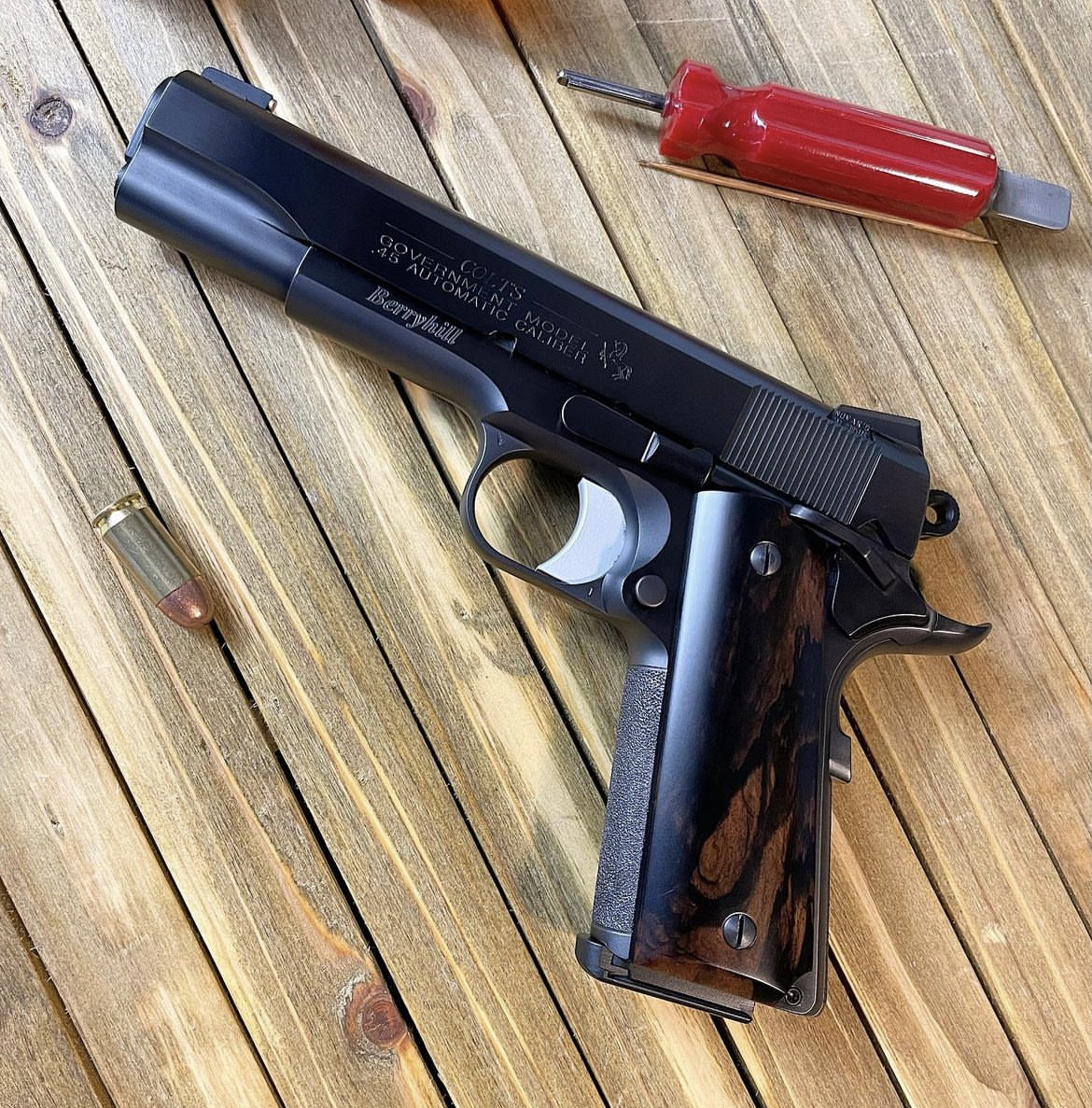
Colt 1911 in .45 ACP by master gunsmith Dave Berryhill of Prosper Texas. Dave was an armorer for various SWAT and law enforcement teams for over twenty years. In other words, he made guns for men who aimed to go into harms way. Dave succumbed to cancer at age 54. If you handle guns daily, please check your lead levels and please consider lead soap. Smooth Gaboon Ebony grips by Wood Caliber—there’s nothing checkered on this gun, so why should the grips be.
 Scattered Shots
That’s a nice bit of work right there. Simple, understated, but to the trained eye, that’s a lot of work done to exceedingly high levels of skill.
Lead levels: Several acquaintances who reload a lot (esp. shotgun ammo for trap/skeet) have elevated lead levels. Once the lead becomes too high, you have to undergo chelation to remove it. This is not cheap or trivial.
But… there’s another angle in the lead poisoning issue: Your privacy, both medical and firearms. If you have a blood test with over 3.5 microgram/dL of serum concentration, your lead level will be reported by the lab or the MD who wrote the order for you to have a blood test for serum lead to your state or local public health agency/department.
This public health agency then will then have a public health nurse (RN) contact you and start asking a LOT of nosy questions, in their ham-fisted attempts to ascertain the source of your elevated lead level. If you get a blood test for lead, and your serum blood level comes back > 3.5 micrograms/dL, you should expect such a call where they ask ask about your diet, your plumbing, the age of your house, the paint in your house, your travel, your hobbies, etc, etc. Many public health nurses who do these interviews are trained to ask about firearms, shooting (esp. on indoor ranges), reloading, etc, especially when the answers to the non-firearms questions for lead sources turn up negative.
All of this will be recorded on a form, which is then sent into your state public health departments, where it will be put into a computer database.
If you don’t want them learning of your firearms activities or ownership, here’s a suggestion that ends the interview quickly: you fish, and you use old lead sinkers, and that you bite on them to bind them to your fishing line or leader.
This is a perfectly plausible and well-known answer, especially among adult men, and your nosy public health nurse will fill out her paperwork and it will disappear into a file, she’ll tell you to “not do that,” and you won’t be bothered again.
Then you’ll have to discuss what action to take on your blood level with your primary doctor.
LikeLike