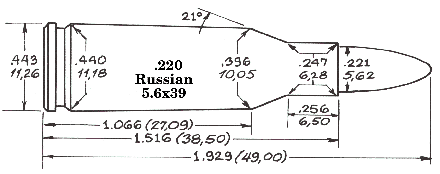
Back in the 50s’ and 60s the USSR decided to come out with a new round for the running deer competition. This competition was a pretty big deal in the shooting world at that time. Taken seriously enough that some AMU members would compete in it. One even showing up with an M14/optic combo that would help develop the XM21.
The round was intended to be used for medium and small game and to be very accurate. The Russians did what they do and used the 7.62×39 case for this new round.

| 3.5 g (54 gr) SP | 2,993.4 ft/s (912.4 m/s) | 1,074.6 ft⋅lbf (1,457.0 J) |
The round turned out to be successful enough that it was used by Finland and ammo was made by Sako and Lapua.


The 220 Russian isn’t heard of much anymore because it gave birth to something that took the case and turned it into something so good that accuracy records would be set with it for years to come. This happened when a couple of Bench Rest shooters named, Pindel and Palmisano decided to neck up the 220 rusisan case to .22 and 6mm, change the shoulder angle and fire form the case walls into the .22PPC & 6MMPPC ( Pindel & Palmisano Cartridge). These two wildcat rounds dominated the BR world for decades and still are. Dozens of variations of these have since spun off in a seemingly endless parade.
 Scattered Shots
So, any clue about why the PPC designs are so inherently accurate? Something about long projectiles in short cases perhaps bucking the wind while providing low recoil?
They seem like pretty oddball rounds to me, because I’m used to much more conventional looking centrefire cartridges like the 6.5 Swede, .223 and .308.
LikeLike
The short fat case gives a very efficent, complete, consistant burn. That consitancy aids in accuracy and is the basis of the later short magnums.
6.5 Grenel and 6 ARC are based off of itvas well.
LikeLike