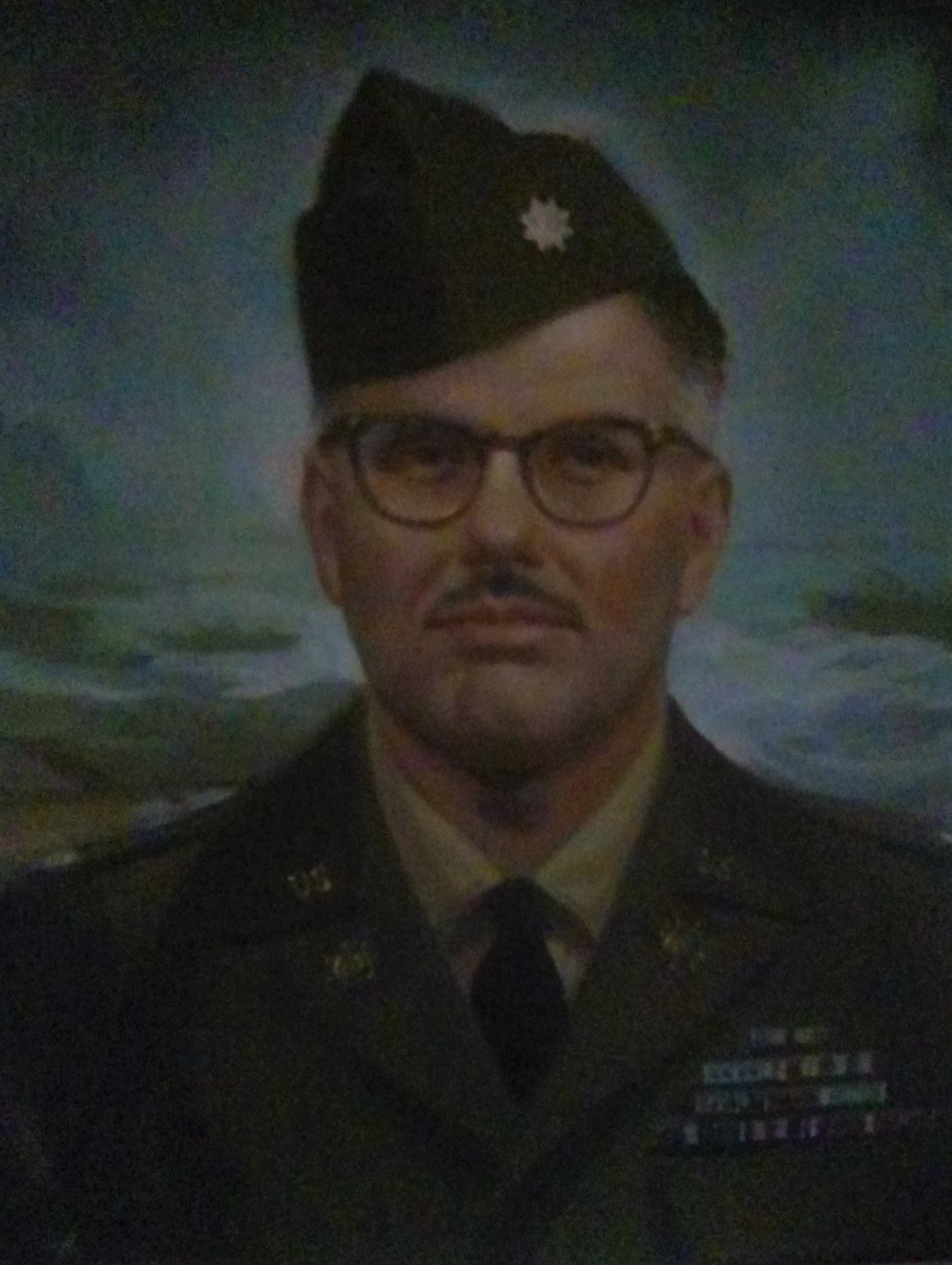
The late “Formerly Famous Gunwriter” Dean Speir was justifiably proud of his father Frank W. Speir. If anything, Dean was too humble about him.
Born 3 September 1910, Frank Speir graduated from the Massachusetts Institute of Technology (MIT) in 1932, receiving his US Army Reserve commission in the Corps of Engineers. Upon being called to active duty in June 1942, he entered the Army’s newly formed Engineer Amphibian Command. Speir helped change the nature of amphibious warfare as one of the originators of the DUKW (D-for 1942 design; U-for utility or amphibious; K-for all-wheel drive; and W-for axel driven) 2-1/2-ton amphibious assault craft.
Within a year, Speir was promoted to the rank of Captain and was sent to North Africa in 1943 to introduce the DUKW to General Mark W. Clark and General George S. Patton. He instructed the British Eighth Army in landing techniques prior to the invasions of Sicily and Italy. Speir had the distinction of being the first American soldier to go ashore in the invasion of Europe. He took part in eight major European campaigns during World War II. Speir was decorated with the Legion of Merit, the Bronze Star, and the Purple Heart, as well as British ribbons for services in the North African and Italian campaigns.
Promoted to Major in 1948, Speir later became one of the Army Transportation Corps’ most decorated officers during the Korean War, receiving the Navy Cross, the Silver Star, a second Purple Heart, and the Korean government’s Syngman Rhee Medal. He was one of only three members of the US Army to receive the Navy Cross during the conflict.
The official award citation was as follows:
“The President of the United States of America takes pleasure in presenting the Navy Cross to Major Frank Speir, United States Army, for extraordinary heroism in connection with military operations against an armed enemy of the United Nations while temporarily attached to Army Tug LT-636 and engaged in evacuating Republic of Korea guerrilla troops from a stranded LST far behind the enemy line on 19 September 1950. Sensing the reluctance of the relief LST to beach in enemy territory under fire, Major Speir volunteered to board it and beach it, which he did. After beaching the relief LST, Major Speir supervised the evacuation of the relief LST, Major Speir supervised the evacuation of over one hundred wounded and about six hundred troops by utilizing three life rafts in tandem. He swam to the beach though pinned down many times by enemy mortar, machinegun and small arms fire and managed to successfully evacuate all personnel with a minimum of losses. By his professional skill, indomitable courage and perseverance in the face of most trying circumstances, Major Speir was responsible for the evacuation of a large number of highly trained valuable troops and his unselfish devotion to duty reflects the highest credit upon himself and the United States Military Services.”
On 15 September 1950, ROK LST Munsan-ho set sail to support the Changsa-dong (Jangsa-dong) Raid behind enemy lines north of Pohang-si. This was apparently a diversionary strike, timed to coincide with the main attack at Inchon. The Munsan-ho carried 772 men of the ROK’s “Independent 1st Guerrilla Battalion”, composed of student volunteer soldiers led by ROK Army Captain Lee Myung-heum. After landing the battalion, the Munsan-Ho broached in the heavy surf due to Typhoon Kezia. On 16 September, Major Speir, then the executive officer of the 8206th Army Unit (AU), Amphibious Training Center (ATC), arrived off Jangsa-dong aboard Army tug LT-636. He and the tug’s civilian captain, Charles Roy, went ashore in a rubber boat to assess the situation and determined that the Munsan-ho was unsalvageable. Speir assisted with the evacuation efforts over the next few days.

The raid attracted the attention of the 2nd Corps of the North Korean People’s Army. On 17 September, the North Korean counterattack began in earnest. The Independent 1st Guerrilla Battalion defended the beachhead for two days. But due to shortages of ammunition, they began to prepare for a retreat. On 19 September, ROK LST Chochiwon-ho (Jochiwon) arrived at Jangsa-dong. The civilian captain was unwilling to risk his ship by running it up onto the beach. According to one account, Speir boarded the Chochiwon-ho, unholstered his pistol, and held it against the captain’s head,
Whatever the exact means of Speir’s direction and encouragement, the captain ultimately brought the Chochiwon-ho close enough that the guerrillas could come out through the surf, again using ropes strung between the ship and the shore. The operation ended on 20 September when the Chochiwon-ho returned to Busan with the survivors of the guerrilla battalion and the crew of the wrecked Munsan-ho, including 110 wounded. 39 had been killed or drowned during the evacuation, and another 39 were left behind because they refused to enter the dangerous surf.
Speir was promoted to Lt. Colonel by 1951. Following his Korean War service, he served as a Project Engineer of the Army’s Amphibious Warfare Program and was the Transportation Corps’ liaison officer at the Research and Development Center of the Army Ordnance Corps’ Tank and Automotive Command (Detroit Tank Arsenal). Speir’s many projects included the 4-ton XM147 “Super Duck”, the 8-ton XM158 “Drake”, and the 60-ton BARC (Barge, Amphibious, Resupply, Cargo). Speir tragically died on 8 July 1956 in Dunkirk, NY during the crash of his Beechcraft Bonanza en route to Detroit, MI. In September 1957, the auxiliary airfield at Fort Story (Virginia Beach, VA) was named Speir Field in his honor.
 Scattered Shots
1 Comment