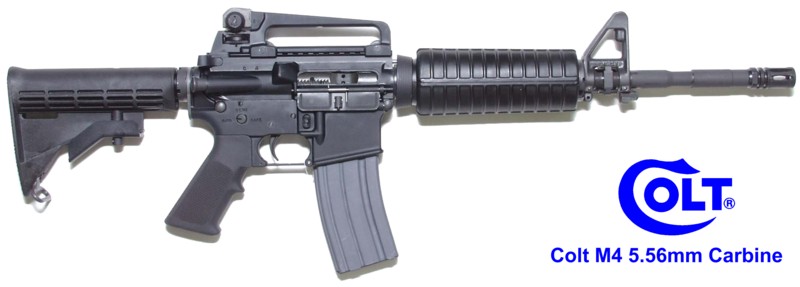
Contrary to popular misconception, the US Department of Defense (DOD) does not own the technical data package (TDP) for either the M4 carbine or its parent, the M16 rifle. In June 1967, in its role as the DOD’s designated procurement agency, the US Army purchased a license from Colt for the TDP and the rights to produce the M16 family of weapons and its component parts.
Some wonder why Colt proprietary rights to the M16 TDP and M4 TDP are still given such reverence by the Army, long after most applicable patents had expired. For example, the Army paid royalties on second-sourced M16 rifles and parts until 1990. It is more glaring in the case of the M4 as very little of the M4’s original design was ever patented by Colt. The short answer is that the Army agreed to such terms in the original 1967 licensing agreement and its amendments, particularly the infamous “M4 Addendum” of 1997.
The Infamous M4 Addendum
The origin of the “M4 Addendum” traces back to the improper release of the M4 TDP by the US Army’s Rock Island Arsenal to the US Navy’s NSWC-Crane in early 1996. NSWC-Crane had requested a copy of the M4A1 TDP to support the solicitation of accessories for the M4 SOPMOD kit. While soliciting an adaptor for training ammunition, NSWC-Crane provided the M4A1 TDP to 21 vendors in August 1996. As one of the potential bidders, Colt was very much surprised to receive a copy of their own TDP drawings, and gave notice that the terms of the 1967 Licensing Agreement had breached. NSWC-Crane quickly attempted to recover all copies of the TDP and sent out non-disclosure agreements (NDA) to the other 20 vendors. All of the vendors except FN Manufacturing complied. FN Manufacturing officials had balked on one of the five terms of the NDA, refusing to state whether they had safeguarded the TDP while it was in their possession. Instead, they provided a letter asserting that they had not improperly used the data.
Around the time, the Army announced the procurement of 716 M4A1 and 9,785 M4 carbines. FN Manufacturing submitted an unsolicited bid, which was promptly rejected. However, the damage was done. Connecticut’s Congressional delegation became involved, demanding a DOD Inspector General audit of the Army and Navy’s actions in their handling of the M4 TDP. By the end of the year, Colt announced that the DOD’s failure to adequately to protect the proprietary data constituted a material breach of the 1967 Licensing Agreement. Thus, the licensing agreement would be terminated, and the DOD could no longer use the TDP in the second-source procurement of the M16/M4 or their parts. Colt also threatened a lawsuit, estimating damages from $43.5 – 70 million. In response, the Army claimed that the license could only be terminated if they had not made a best faith effort to correct the situation.
Settlement negotiations between Colt and the Army dragged on through 1997. In December 1997, an agreement was reached. Colt would waive its damage claims and leave the previous terms of the 1967 licensing agreement intact with regards to the M16 TDP. In return, the Army agreed to not use the M4 TDP for competitive procurement for a set period of time, ensuring Colt’s sole-source status. The resulting agreement was dubbed the “M4 Addendum”.
Sole-Source Clause Upheld
However, FN Manufacturing still hoped to gain a piece of M4 procurement, and found their chance in May 1998. The Army announced that it was awarding Colt a $8,296,925 contract for 15,925 M4/M4A1 Carbines. The following day, FN Manufacturing delivered an unsolicited proposal claiming that they were also capable of producing the M4 for the US Army. The Army’s rejection of the proposal led to FN Manufacturing filing suit in the US Court of Federal Claims.
A series of dismissals and appeals ultimately led to FN Manufacturing challenging the Army’s right to give Colt sole-source rights to the M4, given its similarity to the M16. This placed the Army is the awkward position of claiming that the M4 was really far different than the M16 and XM177, after originally claiming that the M4 had about 80% in common with the M16. The US Court of Federal Claims ultimately dismissed FN Manufacturing’s protests, ruling that the Army was well within its rights to forego any claims to the M4 TDP.
At the time, it probably seemed like a good deal to give Colt sole-source rights to the M4, in return for the DOD maintaining its rights to second-source the M16 and its spares. Back in the late 1990s, the US Army and other service branches intended to issue far more M16 rifles than M4 carbines.
Pure Fleeting and the Sole-Source Blues
All seemed well, until the US Army dramatically expanded its issue of the shorter M4 Carbine over the M16 during its operations in Iraq and Afghanistan, ultimately leading to decision to issue a “pure fleet” of M4. Likewise, the other service branches began to increase their issue of the M4, most notably the decision of the US Marine Corps to issue the carbine as a replacement for pistols and rifles amongst senior enlisted personnel and field-grade officers.
At the same time, Colt’s prices for the M4 began to steadily increase. In December 1999, Colt was charging $521 per M4 carbine (DAAE20-98-C-0082-P00011). By December 2002, Colt’s price for an US Army-configuration M4 carbine was $912 (DAAE20-02-C-0115-P00004). However, the Army was able to gain certain concessions over the years. In July 2006, Colt agreed to lower its prices, and begin to provide basic issue items like the Back Up Iron Sight (BUIS) and M4 Adaptor Rail System (ARS), which had formerly been provided to Colt as Government Furnished Material (GFM) (W52H09-04-D-0086-P00025). Before this concession, the price of the M4 and M4A1 had grown to $1,016 and $1,029, respectively (W52H09-04-D-0086-0039). Afterwards, the price of a basic M4 dropped to $815, and with Colt-provided BUIS and ARS only $1,142 (W52H09-04-D-0086-0042). At the time of the final sole-source delivery order in December 2010, Colt’s price was just over $1,221 per fully-equipped carbine (W52H09-07-D-0425-BR02).
As discussed in “The US Army’s M4 Carbine Controversy”, Colt’s steady increase in prices, combined with stories of M4 unreliability, led to unwanted Congressional attention. In response, rival manufacturers have moved in and stepped up lobbying efforts. They were hoping hoping to gain a share of a second-sourced contract for the M4 carbine, or score a complete win with a contract for a replacement rifle.
What Second Sourcing Really Means
As of 1 July 2009, the sole source clause of the “M4 Addendum” expired, allowing the Army to second source production of the M4/M4A1 carbines and their unique parts. Under the terms of the licensing agreement, however, the M4 TDP remained Colt proprietary data. Those terms also stated that the US Army would have to pay 5% in royalties to Colt, for every M4/M4A1 carbine and/or their unique parts procured from second sources, for another 26 years – through 24 Dec 2037.
Second source contractors would also be required to sign non-disclosure agreements, just as they did for the M16. The non-disclosure/ non-use agreements for accessing the TDP forbid the other companies from using Colt’s proprietary data for commercial sales. Once the second-source vendor’s military contract ended, the company would be required to be destroy all of the TDP information provided to them.
The Dual Path Strategy
In October 2009, in response to increasing Congressional criticism of the M4 carbine, Army officials proposed a dual path strategy: the M4 Product Improvement Program and the Individual Carbine.
As Phase I of the Product Improvement Program, the Army would upgrade all of its M4 to the M4A1 standard, including the heavy profile SOCOM barrel and ambidextrous selectors. The proposed Phase II was to explore improved parts and accessories for the M4A1 to enhance ergonomics, reliability, durability, and accessory zero retention. Improved parts under consideration included alternatives to the M4 RAS and the bolt/bolt carrier assembly. A future Phase III was intended to examine alternatives to the Stoner direct gas operating system.
In September 2010, the Army announced it would buy 12,000 M4A1 from Colt by the end of 2010, and would order 25,000 more M4A1 by early 2011. Conversions began in 2011. The Army planned to buy 12,000 M4A1 conversion kits in early 2011 and an additional 65,000 later that year. The 101st Airborne Division began fielding newly-built M4A1 in 2012, and the 1st Infantry Division became the first unit to convert their M4 to M4A1-standard in May 2014.
The Individual Carbine
In addition to the M4A1 PIP, the Individual Carbine program was proposed as a potential outright replacement for the M4A1. The Joint Requirements Oversight Council approved the Individual Carbine proposal in August 2010. Presolicitation notice W15QKN-11-R-F003 was posted 31 January 2011.
A 12 to 18-month testing phase commenced and over 1 million rounds were fired. Weapons submitted included the Adcor Defense BEAR Elite, the Beretta ARX-160-IC, the Colt CM901 and Enhanced M4 (also known as the Advanced Piston Carbine (APC)), the FN Herstal FNAC (a variant of the SCAR), the Heckler & Koch HK416A5, the Knight’s Armament Company SR-16, Lewis Machine & Tool, the LWRC M6-IC, the Remington ACR, the Robinson Armament Co. XCR, the Smith & Wesson M&P4, Stag Arms, and Troy Defense.
From January to May 2011, IC participants were afforded the opportunity to a “Familiarization Shoot and Compatibility Check” (FSCC) at H.P. White Laboratory. The FSCC tests were not part of the official competition record. Each carbine vendor was allotted 10,800 rounds of the new M855A1 Enhanced Performance Round (EPR) to determine their weapon’s rate of fire, reliability, accuracy, barrel life, and other attributes. Firing took place over a four day period on H.P. White’s 25 and 300 yard outdoor ranges, and its 100 meter indoor range. The compatibility check consisted of fitting and firing of the M320 grenade launcher and M26 Modular Accessory Shotgun System (MASS).
Phase I of the official competition, the Engineering and Manufacturing Development phase, commenced 7 April 2011. Factors included the weapon’s ability to mount accessories, such as optics and suppressors, the company’s ability to produce 2,000-4,200 carbines per month, and production costs. In November 2011, Colt withdrew its CM901 rifle from the competition over the TDP licensing requirement. Other companies backed out for various financial reasons, including Knight’s Armament Company, LWRC, Smith & Wesson, and Stag Arms.
In May 2012, the Army selected the companies and rifles that passed Phase I of the Individual Carbine competition and moved on to Phase II. While Phase I eliminated companies that would not have had the production capacity to manufacture sufficient numbers of their rifle, Phase II included actual test firings of the weapons to assess accuracy, reliability, and durability. The eight Phase II contenders were the Adcor Defense BEAR Elite, the Beretta ARX-160, the Colt Enhanced M4, the FN Herstal FNAC, the Heckler & Koch HK416A5, Lewis Machine & Tool, the Remington ACR, and Troy Defense.
Second-Source M4 Contract Award Woes
Meanwhile, the requirements for additional M4 and M4A1 carbines still needed to be met. On 20 April 2012, the US Army Contracting Command in Warren, Michigan announced an award of an indefinite delivery/indefinite quantity (IDIQ) contract for the procurement of a maximum of 120,000 M4/M4A1 carbines to Remington (W56HZV12D0056). Unsurprisingly, Colt filed an award protest with the GAO.
The GAO ruled in favor of Colt over the Army’s miscalculation of royalties it would receive for contract awards on its M4 design. The 24 July 2012 ruling forced the Army to rework the original solicitation so the vendors that fell into the competitive range could submit new price bids. All gun makers involved were forced to reveal their previous price bids for the original $84 million contract to keep things fair.
Colt then filed a new protest on 9 October 2012 with the GAO three weeks after receiving the Army’s amended 21 September 2012 solicitation. The GAO denied Colt’s second protest in a 16 November 2012 decision. Instead of the contract being re-awarded to Remington, the Army awarded a new contract for 120,000 M4A1 carbines worth $77 million to FN Herstal on 22 February 2013 (W56HZV-13-D-0030).
Killing Blow for the Individual Carbine
On 19 March 2013, the DOD released testimony including the DOD Inspector General’s reconsideration of the Individual Carbine program. The Inspector General questioned why the Army was pursuing a new rifle when the structure of their total force would be reduced. A draft report was to be released elaborating concerns and giving recommendations to the Defense Department.
On 2 May 2013, the Army announced it was considering cancelling the Individual Carbine competition. Phase II of testing had been completed, but neither the soldier evaluations nor contract awards had been conducted as part of Phase III.
On 6 June 2013, the House Armed Services Committee passed an amendment to the FY 2014 budget that would prevent the Army from cancelling the IC program before user evaluations. Committee members voted unanimously for the amendment that would require user evaluations, a business case analysis, and reports back to congressional defense committees before a final decision is made. However, it would not take effect until 1 October 2013, which gave the Army four months to decide the fate of the program without violating a congressional directive.
Thus, on 13 June 2013, the Army formally cancelled the Individual Carbine competition. The Army said none of the carbines evaluated during testing met the minimum scoring requirement needed to continue to the next phase of the evaluation. Letters were sent to the gunmakers involved to inform them that no future contract awards would be made for the soldier evaluation phase. PEO Soldier reported that no competitor demonstrated a significant improvement in weapon reliability to justify buying a new carbine. Weapons tested also had low reliability performance using the M855A1 EPR.
Second-Source M4 Contract Award Woes – Round Two
On 5,December 2014, the Army issued Solicitation No. W15QKN-15-R-0011 for a follow-on set of open-source contracts for 292,000 M4/M4A1 carbines. The Army received six offers, including offers from Colt, FN Herstal, and Remington. On July 22, 2015, the Army narrowed the competitive range of bids to the latter three.
On 25 September 2015, the Army Contracting Command, Picatinny Arsenal, New Jersey awarded IDIQ contracts to both Colt (W15QKN-15-D-0102) and FN Herstal (W15QKN-15-D-0072). In total, the two contracts were worth up to $212 million. The Army’s plan was that beyond the minimum guaranteed orders from each company, the two companies would compete for future individual work orders. Conceivably, one company could take the bulk of the contracts’ value.
After filing and then withdrawing an award protest with the GAO, Remington filed a lawsuit on 24 November 2015 in the US Court of Federal Claims against Colt, FN, and the Army. In particular, Remington alleged that the Army erred by awarding to Colt, given that it had been in the middle of its bankruptcy.
On 25 March 2016, The Court of Claims ruled in part in Remington’s favor. The court enjoined the Army from awarding any new task orders to Colt for 30 days or until the agency has performed a new responsibility determination
that addresses Colt’s current financial status and submitted that new determination, and award decision, if appropriate, to the court. Ultimately, Remington withdrew its complaint, and the court dismissed the case on 31 May 2016.
 Scattered Shots