Beginning on the 27th of November 1950 and lasting seventeen days it would become one of the most famous battles of the 20th century and a key point in Marine Corps lore.
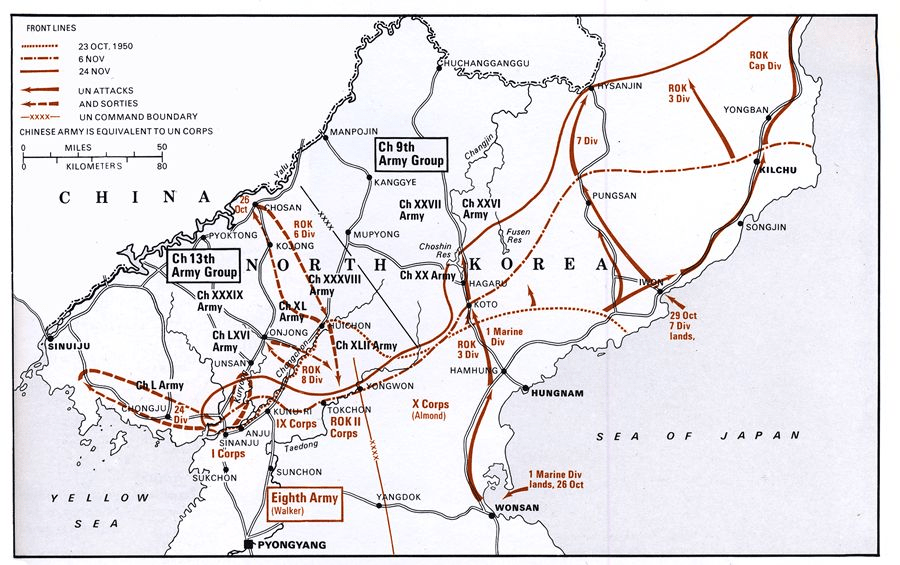

On the night of 27 November, the PVA 20th and 27th Corps of the 9th Army launched multiple attacks and ambushes along the road between the Chosin Reservoir and Kot’o-ri. At Yudam-ni, the 5th, 7th and 11th Marines were surrounded and attacked by the PVA 79th and 89th Divisions, with the 59th Division attacking the road between Yudam-ni and Hagaru-ri to cut off communication. At Hagaru-ri, the 1st Marine Division command headquarters was targeted by the PVA 58th Division. Finally, the PVA 60th Division surrounded elements of the 1st Marines at Kot’o-ri from the north. the UN forces were cut off at Yudam-ni, Sinhung-ni, Hagaru-ri and Kot’o-ri by 28 November.


As it became clear that they were surrounded the 1st MarDiv fought it’s way back down the road mile by mile. The process often consisted of units having to attack and seize the hills on either side to allow the convoy to pass. Then repeat at the next hill, so on and so on. It was an intense battle and there is thankfully a lot of documentation on it so make sure to read it. I have a link to the official USMC history which is my favorite, as it’s well done yet easily digestible. I would recommend combing through the memoirs section at koreanwar-educator.org for some intense first hand accounts as well.


Two pieces of lore I want to brush aside are that the attack came as a surprise. Either a surprise that it happened or a surprise that the Chinese were involved. Perhaps the only person this was a surprise to was General Almond, X Corps commander. The Chinese had begun engaging UN units at the end of October a month prior. And units were reporting either contact or sighting Chinese units continually. The reports were just being dismissed. (Never mind that the ROKs had lost essentially an entire division to the Chinese during this time so these were not small skirmishes.) In fact part of the reason the 1st Marine Division did as well as it did was that General Smith was anticipating contact and refused to move at a pace that would stretch them out.

Secondly is that it was a Marine only battle. True the Marines were the focus of the attack but X Corps consisted of four other divisions. The US 7th and 3rd Infantry Divisions and two ROK divisions, the 3rd and Capital.

The Gear

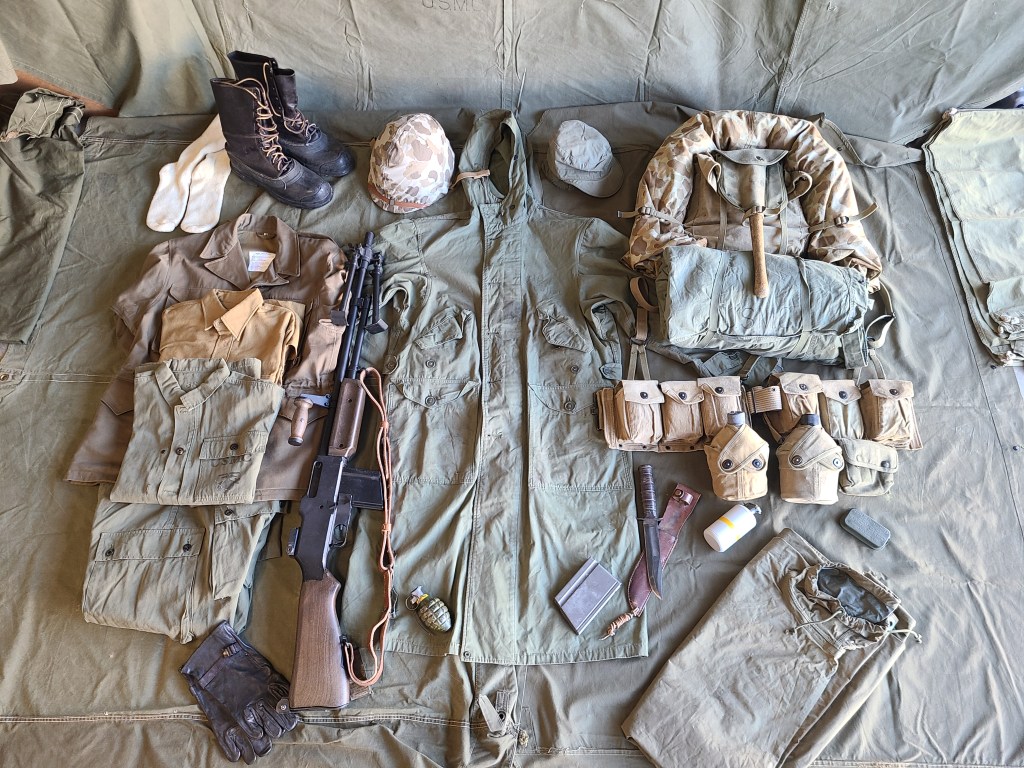
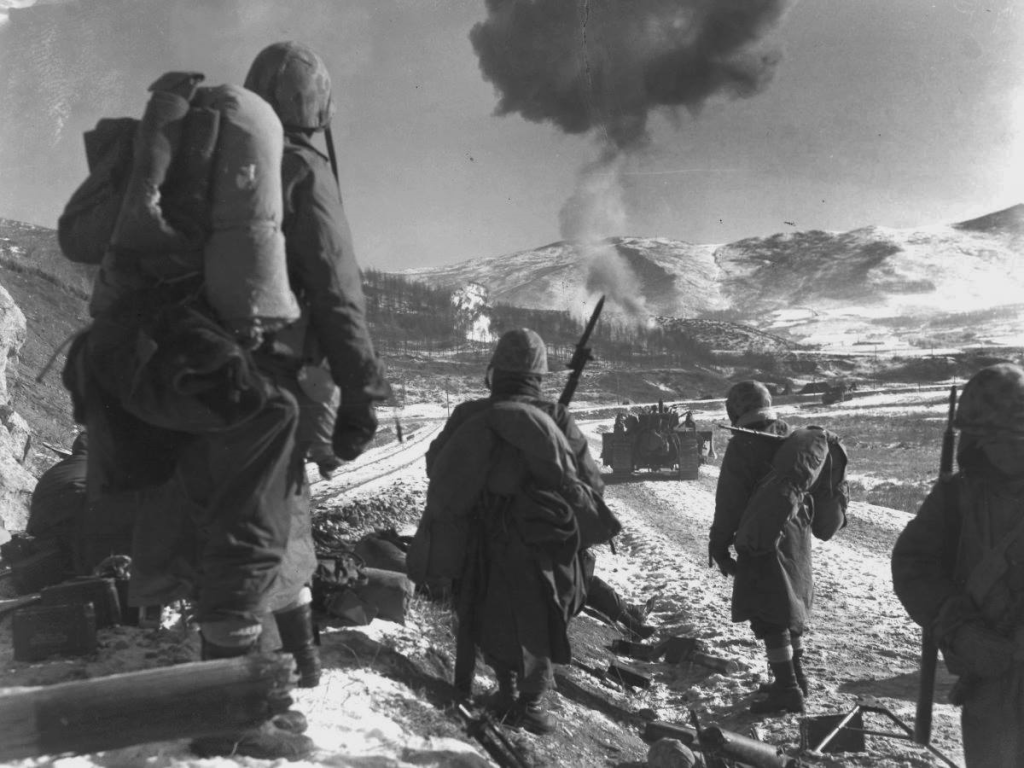
One of the most distinguishing things of the Battle of Chosin Reservoir is the cold and snow. Quite the opposite of the Marines last war in the heat of the Pacific. Like the Army the official winter uniform was the M1943 suite. Since that alone is not enough for the sub zero temperatures underneath would usually be long johns, followed by the wool uniforms pieces. Often the P1944/47 HBT fatigues would then be worn over that and under the M1943 uniform. All that would then be covered by the long parka.


Headgear was either the P1944 or M1943 cap and when they could get them the Pile cap with ear flaps. Gloves were either the M1949 (basically work gloves with wool liners) or the trigger finger mittens. Footwear was mostly Shoepacs, both the M1944 and earlier High Shoepacs are seen in photos. A few marines had rubber over shoes that would have been worn over their regular boondockers and leggings. Unfortunately the cold was so extreme that the shoepacs did little to help.
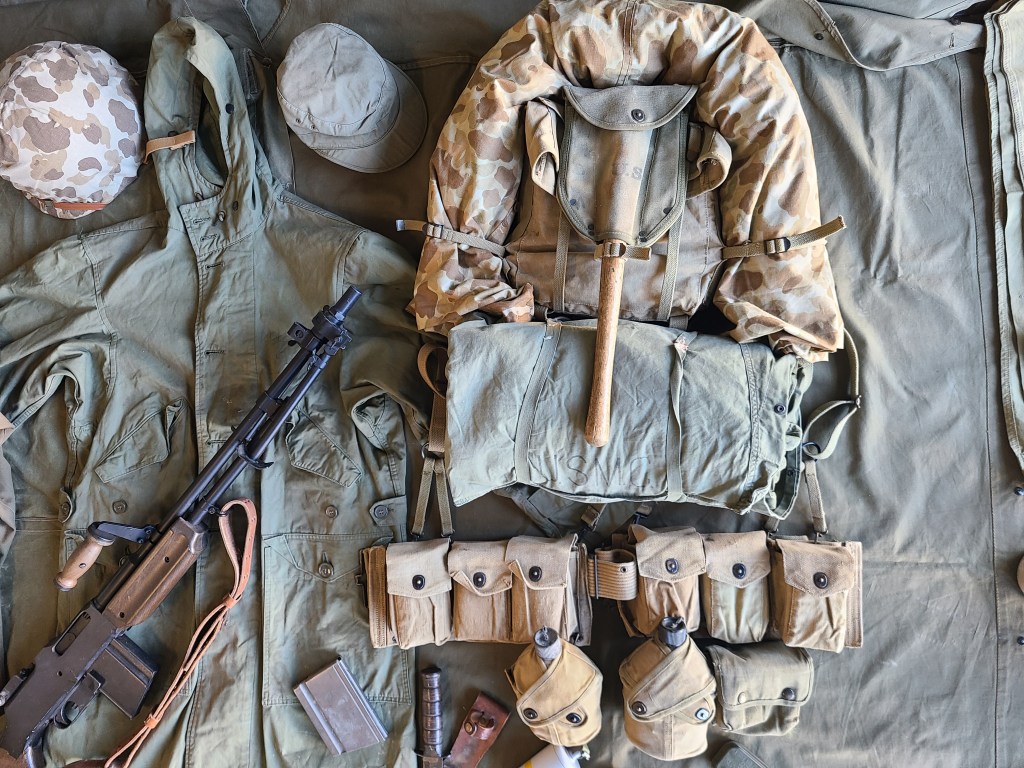


Field gear was essentially the same and often left over from World War II. Some was late or post war which shows up in photos as the mix of OD3 (khaki) and OD7 (green) in the webbing. The most unique and probably useful item was the down filled M1949 sleeping bags. They provided the warmth needed to survive in the extreme cold, although could often result in marines getting caught in them at the outset of an attack.

Some of the marines iconic gear form WWII is less ubiquitous here in 1950. The camouflage shelter halves and ponchos appear to be about 50/50 still in use alongside “army” plain OD ponchos and shelter halves.



Links
https://www.koreanwar2.org/kwp2/usmckorea/PDF_Monographs/KoreanWar.FrozenChosin.pdf
http://www.koreanwar-educator.org/memoirs/dixon_gene/chosin/p_mem_dixon_chosin_1.htm
 Scattered Shots