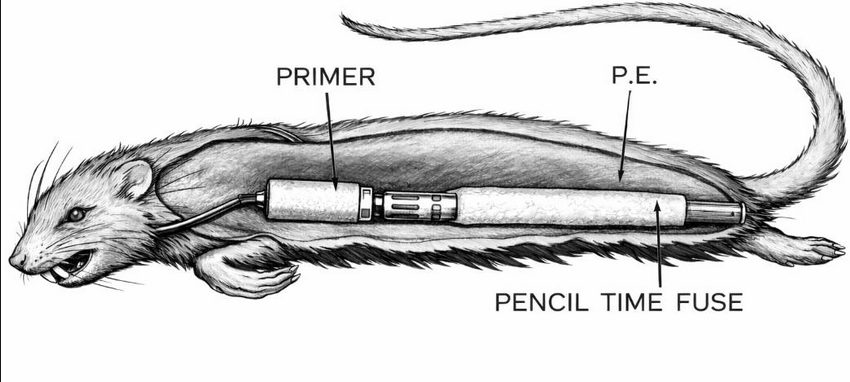
During World War II, Britain’s Special Operations Executive came up with one of the strangest sabotage ideas of the war: the “explosive rat.” Dead rats were stuffed with plastic explosive and sewn back up so they looked like ordinary carcasses. The plan was to smuggle them near German boiler rooms and coal piles, hoping workers would toss the rats into furnaces; the explosion could then rupture a boiler and cripple a factory.
The first shipment was intercepted by German authorities before any rats were actually used, but that failure turned into a psychological victory. Once the Germans realized what the British had intended, they became deeply alarmed by the possibility of more explosive rats in circulation. Training material and warnings went out, and factories were ordered to inspect coal and dispose of any rat bodies with great care, tying up time, attention, and security resources across industry.
No confirmed German boiler explosions were ever caused by these rat bombs, yet the mere knowledge that such a weapon existed made German officials and workers paranoid about something as mundane as a dead rodent. British files later noted that the disruption and extra security work the idea created was “a much greater success… than if the rats had actually been used.”
 Scattered Shots