From our friend Nhat
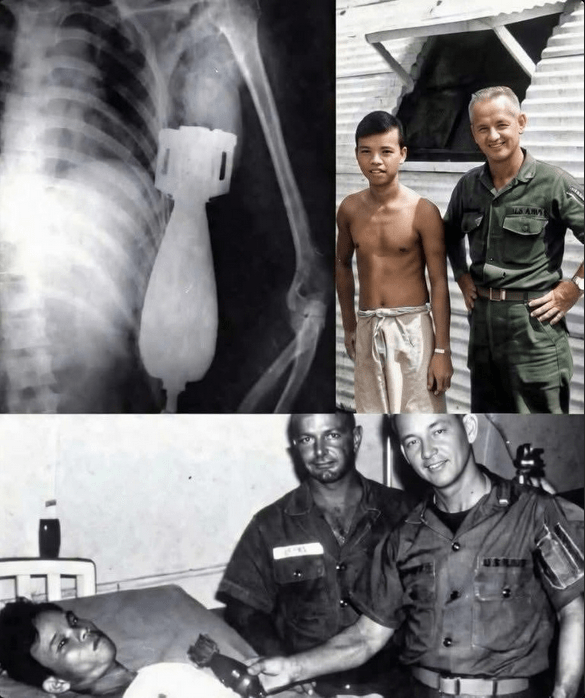
In October 1966, amid the long and grueling days of the Vietnam War, a quiet story began circulating through field hospitals near Da Nang—a story so extraordinary it seemed almost impossible to believe. A young soldier of the Army of the Republic of Vietnam named Nguyen Van Luong had been wounded in a way no one could comprehend. Instead of shrapnel, he had been struck by a 60 mm mortar round that pierced his shoulder and upper chest before lodging beneath his arm. The round was still live. Every breath, every heartbeat carried the risk of ending everything in an instant.
Yet Luong remained conscious, calm, and alive—holding on with a quiet resilience that astonished everyone around him. He was rushed to a U.S. Navy hospital, where the doctors faced a moment that tested not only their skills but also their courage. Among them was Harry H. Dinsmore, who understood that this was no ordinary surgery. The slightest mistake could have cost the lives of everyone in the room.
With steady hands and absolute focus, the surgical team worked slowly and carefully, and against all odds, they removed the round without triggering an explosion. Explosives specialists later rendered it safe. And somehow—almost unbelievably—Luong survived.
Soon afterward, X-ray images and photographs of the round inside his body spread around the world. Not as symbols of terror, but as reminders of the fragility of life—and of the power of human skill, courage, and hope when they come together.
Nguyen Van Luong’s survival was more than a medical miracle. It became a quiet testament to resilience, compassion, and the moments when humanity rises above even the darkest circumstances. Sometimes, history does not need to speak. Sometimes, it simply endures—against all expectations.
 Scattered Shots
There’s a guy who’s used up *all* his luck in one go.
LikeLike
Ain’t that the truth !
LikeLike
Anyone know if he survived the war?
LikeLike