By Luis Valdes
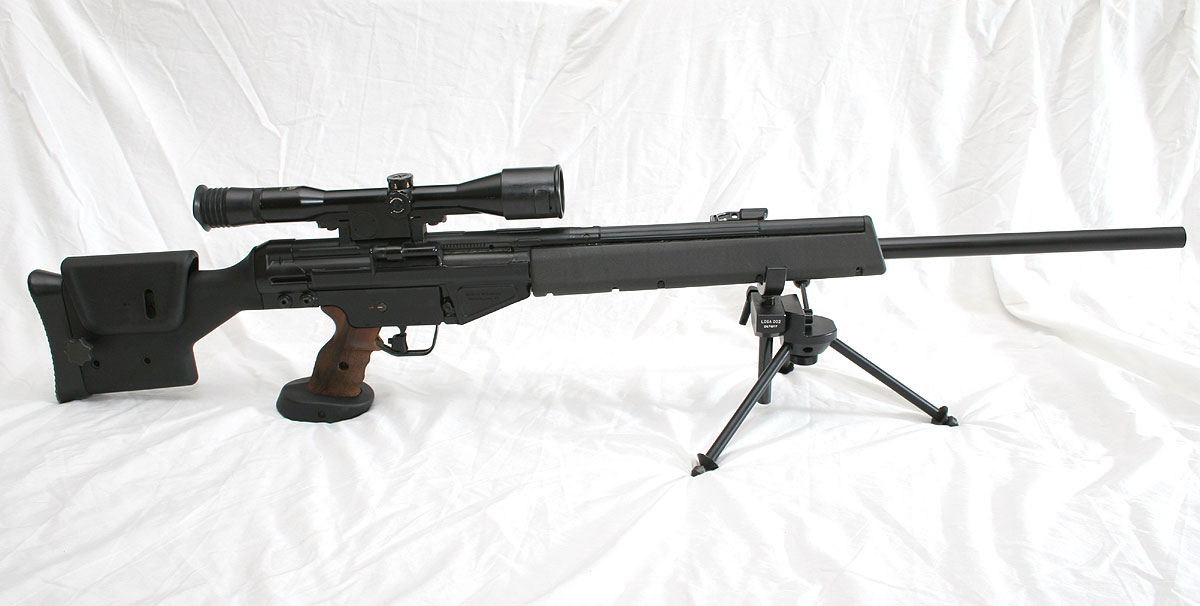
Growing up I was fascinated with the precision rifles that came about in the Cold War. Rifles like HK PSG1, a rifle with mystical abilities in an era where your average semi auto did 4 to 6 moa and 2 to 3 moa was considered damn good.

A G3 in spirit that was taken to the end of its ability with mechanical accuracy. A rifle that claimed 1 moa standard with good ammo. It was an expensive beast that was a heavy SOB. Had a special tri-pod, and one specific special scope for it. But in the late 70s and early 80s. It was this or a customized M1A.

The only option was to build yourself a M21 clone and spend an ungodly sum of money and still dream of that solid 1 moa consistency. But now we live in an age where even the less popular rifles can do 1 moa and do it for under $1,000 easily.

The FNH FNAR is under a grand and it does everything the PSG1 did, but better and is a constant 1 moa gun. And that is nothing. Right now for under $400 without even trying, a new shooter can get a factory sub moa bolt gun in 6.5 or .308 and do 1,000 yard shooting with good glass for under $1,000 total. Hell, I see Thompson Center guns in 6.5 Creedmoor for under $300.

Guns like the Ruger American blow guns like a Remington 700 VLS out of the water.

What an amazing time we live in. I love my FNAR, it is absolutely everything I love about the PSG1, but better and cheaper. And the bolt guns coming out today make guns like my 700 VLS seem like the old muskets of yore.
 Scattered Shots
From my perspective, which isn’t that of a benchrest rifle builder but someone who builds/improves/rebarrels hunting rifles, I think we have a triple convergence of improvements:
1. We have better barrel quality today. While cold hammer-forged barrels aren’t preferred by benchrest/F-class shooters, they have been proving pretty consistent improvements for hunters and casual shooters. Part of this is because they have no tool marks/chatter in them as some of the button/broached barrels used to. Single-point cut barrels are still preferred by benchrest guys – but they’re often using premium single-point cut barrels to make rifles that “print in the 1’s” – meaning groups of 0.1″ plus or minus at 100 yards.
2. Match and long range bullets are being produced that are both of much higher quality (consistency) as well as much better design (lower Bc’s). The Berger/Barnes bulllets of solid copper can dramatically improve the groups of existing rifles. Before customers just replace a barrel on a classic hunting rifle with a new barrel, if they reload I advise them to try a load with the new solid copper bullets. Sometimes the improvement is quite dramatic – from about 2″ at 100 to 1″ or less at 100 – just by using a new bullet.
3. Smokeless powders have improved quite a bit in terms of temperature stability. The standard deviations of muzzle velocities of some powders are down in single digits. Powders like H4350 and Varget have really reduced vertical stringing of groups.
Lastly, I think the technology of stocks/bedding blocks/chassis systems has improved things for many shooters. When you look at the experiments run by the benchrest guys over decades, it became clear that getting away from nice wood stocks, even with bedding, was an improvement.
LikeLike
Yes, 100%. I grew up hearing the Trinity of “bullets, bedding and barrels” as most important factors and have seen scant little evidence otherwise.
LikeLike